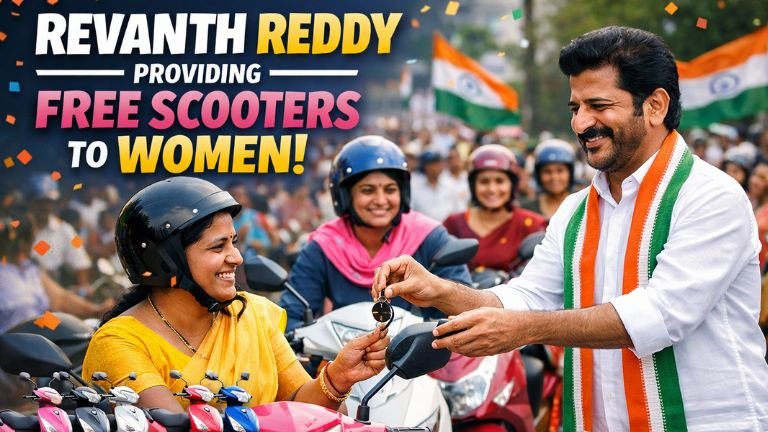
Free Scooty Scheme: Giving India’s Daughters the Power to Ride and Rise
In many parts of India, the simple act of reaching school or college becomes a hurdle for young girls. Long distances, poor transport, and safety concerns often force them to drop out before completing higher education. To break this cycle, several state governments have rolled out the Free Scooty Scheme—an initiative that rewards meritorious female students with scooters, either fuel-based or electric.
More than a convenience, this program symbolizes freedom, equality, and empowerment. With mobility in their hands, young women are better positioned to chase their dreams of education, careers, and independence.
Vision and Objectives
The Free Scooty Scheme is not just about distributing vehicles—it’s about creating opportunities. The goals include:
Encouraging academic excellence among girl students.
Increasing enrollment and retention in higher education.
Overcoming transport barriers in rural and semi-urban regions.
Empowering young women to travel safely, confidently, and independently.
State-Wise Schemes
1. Uttar Pradesh – Rani Laxmi Bai Yojana
Launched in the 2025–26 budget with a fund of ₹400 crore.
Scooters provided to girls scoring 75% or above in Class 12.
Applicable for undergraduate students with a family income below ₹2.5 lakh.
Online applications accepted through education department portals.
2. Assam – Pragyan Bharati Scooty Scheme
First introduced in 2020, upgraded in 2025.
Girls in government schools scoring 60% and above get scooters.
Benefits also include ₹1,000 monthly for mess charges and ₹50,000 support for education loans.
Around 20,000 scooties distributed every year.
3. Rajasthan – Kali Bai Bheel Medhavi Scooty Yojana
Focuses on marginalized communities.
Scooters, helmets, insurance, and reimbursements provided to Class 12 toppers.
Benefits reach over 10,500 girls annually since April 2020.
4. Karnataka – Scooty Scheme for Labourers’ Daughters
For girls aged 18–40, whose parents are registered construction workers.
Offers a free electric scooter or ₹50,000 financial aid.
Applications processed through the Labour Department portal.
Quick Eligibility Overview
| State | Marks Required | Income Cap | Beneficiaries |
|---|---|---|---|
| Uttar Pradesh | ≥ 75% (Class 12) | ≤ ₹2.5 lakh | UG students within the state |
| Assam | ≥ 60% (Govt schools) | As per state rules | Higher education students |
| Rajasthan | Merit-based (Class 12) | ≤ ₹2.5 lakh | College-going girls |
| Karnataka | Not marks-based | Labour status | Daughters of labourers |
How the Scheme Works
Application: Eligible students apply online with their marksheets, ID, income proof, and other documents.
Verification: Authorities check the academic, income, and residency details.
Selection: Based on merit and quotas, candidates are shortlisted and informed through SMS or portals.
Distribution: Scooters (fuel/electric) are handed over via authorized dealerships, along with helmets and insurance.
Transformative Impact
The Free Scooty Scheme is more than just a transport facility—it is a catalyst for change. It helps:
Reduce dropout rates, especially in remote villages.
Empower girls to pursue college, jobs, and skill training.
Save families money on daily travel expenses.
Encourage eco-friendly practices through electric scooters.
For example, in Assam, one scooty has allowed girls from over 150 villages to attend college regularly—showing how a small step can bring a massive ripple effect.
Challenges & the Road Ahead
Despite its success, some issues remain:
Low awareness in rural belts; schools and panchayats must actively spread information.
Strict cutoffs (like Assam’s 80% requirement in some cases) risk excluding many deserving students.
Training needs: Driving lessons and license support must be expanded.

Conclusion
The Free Scooty Scheme is not just a government initiative—it is a movement toward equality and opportunity. By linking education with mobility, it ensures that no girl is forced to abandon her dreams due to lack of transport. As more states adopt and expand the scheme, India moves closer to a future where every girl can study, work, and travel without barriers—on her own ride, at her own pace.
